
Your best people are covering for your worst.
Your managers can see it. Most of them were never taught how to have that conversation, so it keeps not happening, and your top performers keep noticing what gets tolerated. We train your managers to have the difficult conversation. Ninety minutes, online, $279 a seat.
- IntentI want to talk because…
- FactsI’ve observed…
- Theme/impactMy concern is…
- PerspectiveHelp me understand…
- Next stepsGoing forward…
Five lines, in their own words, before they leave.
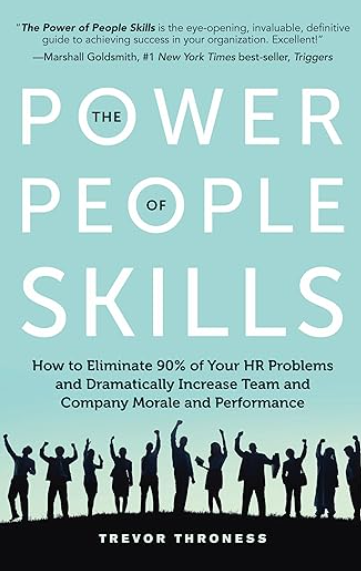
Companies running Trevor’s work
- COBS BREAD
- VCA CANADA
- TEEMA
- KELSON GROUP
- RDM LAW FIRM
- KMS TOOLS
The Cost: Your worst performer learns that the standard is whatever they can get away with. Your best performer picks up the slack, watches nothing happen, and starts working out how long they are willing to do that. One of them is going to leave over this, and it will not be the one you were worried about.
Reward top performers. Deal with underperformers.
That is the whole job of a manager, and most of yours are good at the first half. The second half is a skill nobody taught them, so it drops off the list. Your best people notice what leadership tolerates.
DISC helps the leader adjust the feedback, not avoid it.
Every personality has its own excuse for putting it off.
Your managers are not all avoiding it for the same reason, which is why one pep talk from you never fixes it. Each style stalls differently, gets it wrong differently, and needs coaching on a different thing.
Why a D manager stalls
Routes around the person, takes the work back, or jumps straight to replacing them. The conversation never happens because it feels slower than doing the work themselves.
How it goes wrong when they do it
Too blunt. Too fast. Turns clarity into intimidation.
How to say it to a D
Brief. Direct. Impact-focused. Give them a role in solving it.
Why an I manager stalls
Wants the relationship intact more than the problem solved. Offers encouragement, hints at it warmly, and leaves the room having said nothing that costs anything.
How it goes wrong when they do it
Too relational. Too much talking. Avoids the specific hard line.
How to say it to an I
Relational. Specific. Warm but not vague. Bring stories back to commitments.
Why an S manager stalls
Protects the peace and absorbs the extra work personally. There is always a reason this week is the wrong week, and the team picks up the slack.
How it goes wrong when they do it
Too soft. Hints instead of says. Makes peace but leaves ambiguity.
How to say it to an S
Private. Calm. Context-rich. Clear next steps and support.
Why a C manager stalls
Builds a file for six months and never opens it. The bar for being certain enough to speak keeps moving, so the conversation stays permanently one more data point away.
How it goes wrong when they do it
Too much evidence. Too cold. Debates details instead of leading change.
How to say it to a C
Evidence-based. Precise. Fair. Avoid exaggeration.
Same standard. Different path to clarity.
Your managers are not bad at this. They were never taught it.
Almost nobody is. People get promoted for being good at the work, then get handed someone who is not doing theirs, and are left to figure it out. Coaching them through that is a job you do not have time to do yourself. We do it for you. Trevor Throness has spent thirty years walking owners and executives through exactly these conversations, and the method in this workshop came out of that work.
We equip your managers with actionable training they can apply immediately.
Three steps.
Pick who goes
Anyone who holds a standard or runs a one-on-one. Send one, or send the whole bench. Group pricing is available.
They come prepared
Each one takes the assessment, picks the conversation they have been putting off, and gets a brief built for their style and the other person’s. All of that happens before the session, without you chasing it.
They come back with a date
A written plan, a response plan for how the person reacts, and the day it happens. Most hold the conversation inside two weeks.
Every manager leaves with a plan.
A conversation written out, adapted to the person they have to have it with, and a date in the calendar. Five things come back with each person you send.
- The real issue named clearly
- The message written as facts, theme and impact
- A delivery plan built for your style and theirs
- A response plan for pushback, emotion, silence and excuses
- 30/60/90 commitments and a follow-up date
The message does not change based on DISC. The delivery does.
Adapt the delivery. Do not dilute the message.A brief written for their personality and the other person’s.
Most companies have taken DISC. Far fewer have made it useful. Before the session each manager enters their own DISC type and the other person’s, and the tool generates a brief for that exact pairing.
It tells them where their own style is likely to trip them up with this particular person, and how that person is likely to take it. Then it covers what to change about language, timing and tone so the message lands, and which reaction to be ready for.
None of it writes the conversation for them. That part they do in the room, in their own words, which is the only version they will actually say out loud.
Do not know the other person’s type? They enter a best estimate, and the brief labels it as an estimate.
Your instinct
“We need to address this directly and fix it.”
They may experience that as
“I’m being pressured before I’ve had time to process.”
Watch yourself
Your pace. What feels efficient to you reads as pressure to them, and pressure makes them agree without meaning it.
Tone
Keep the message clear, but slow the pace, provide context, and give them room to respond.
Ninety minutes of actual work.
They are writing their own plan the whole way through. Cameras on, small room, and nobody has to name the person they are talking about. The other managers in the room come from other companies, so no one your manager works with is watching.
Name the conversation
You pick the one you have been putting off. Write what you saw, heard or measured. Leave their motive out of it.
Diagnose the real issue
Is this a performance problem, a values problem, or a style you find irritating? Three different answers, three different conversations.
Prepare through DISC
Open your brief. Your risk under pressure, theirs, and the place the two of you will collide.
Build and rehearse it
Five lines in your own words, then ninety seconds saying the opening out loud. Clarity improves when words leave your mouth.
Plan for the reaction
People challenge, talk, go quiet or debate the facts. You plan for the one you expect and stay on the message.
Commit to a date
Their commitments, yours, a 30/60/90, and the day this happens. If this stays theoretical, the session failed.
DISC is a lens, not a label.
Personality tools go wrong in companies when they start deciding things they were never built to decide. We are explicit about this in the room.
What Trevor’s work does inside a company.
We decided to implement Trevor’s strategies across the country in over 150 locations and over 3,500 employees. The result has been a transformation of our culture. People’s lives have been positively impacted — professionally and personally. Morale is high and sales and profits are up as a result.
Daryl VerbeekSenior VP, VCA CanadaAt first, we resisted, “This just won’t work with a law firm.” But we persisted and the results have been remarkable: our client base and profits have steadily improved, and staff engagement and morale is the healthiest it’s ever been.
Doug LesterPartner, RDM Law FirmWe have locations around BC and Alberta, so getting people on the same page can be very difficult… Until now. Our entire management team and location managers take the same great courses and then meet monthly online with our coach to apply it to our situation. People are engaged, the courses are excellent, we love our coach, and we are all learning together!
Jason FawcettPresident, Kelson GroupThe range of topics delivered, the open dialogue, experience, and examples that Trevor brought to each session were outstanding and provided a path for our Franchisees and Managers to look at leadership, coaching, and connecting with their teams in a new light. Many have implemented these strategies in their bakeries and have seen immediate results.
Michelle ChudobaNational Ops & Training, COBS BreadI’ve experienced Trevor’s approach firsthand and it’s been crucial to sustaining our growth. I can’t imagine a business that wouldn’t benefit greatly from his help.
Brian AntenbringFounder, TEEMAWhat you get back.
Your managers go and work on their own situations. What comes back to you shows up in four places.
- Problems get handled a level down, by the manager whose job it was, instead of arriving on your desk as a crisis
- You stop losing good people to silence. The ones who quit are rarely the ones you were worried about
- One vocabulary across the business, so disagreements stay about the work
- A cheap way to see how we work before you commit to anything bigger
We decided to implement Trevor’s strategies across the country in over 150 locations and over 3,500 employees. The result has been a transformation of our culture. People’s lives have been positively impacted — professionally and personally. Morale is high and sales and profits are up as a result.
Daryl VerbeekSenior VP, VCA CanadaSend one manager, or send the bench.
Open enrolment, so your managers work alongside managers from other companies. Everyone gets the assessment, the brief and the planner.
A single manager
- The 90-minute live online session
- DISC assessment and 13-page report, free
- A brief built for your style and theirs
- The conversation planner and 30/60/90 chart
Sending a group
- Everything in a single seat, for each person you send
- Your managers hearing each other’s situations
- One shared vocabulary when they get back
- Assessments land in your Hub if you have one
Take the package within 60 days of the session and what you paid for seats comes off year one, up to $1,000. The package includes every workshop, so you have already paid for this one.
Where managers usually go next.
Ninety minutes is a taste of how we work. Most companies carry on in one of these directions. None of them is a prerequisite.
Keep sending managers
New workshops run every quarter on the next thing DISC can fix. Send the same people or work through your bench.
Get everyone assessed
Run the assessment across the company so the tools stop being generic. Reports by person, team and location live in your Hub.
Certify someone inside
Train one of your own to run the DISC team workshop for every team, as often as you like. That is certification.
Take the whole package
Assessments, Hub, certification and every workshop included for a year. What you paid for this workshop comes off year one if you sign within 60 days. See the package.
Get your managers into the next cohort.
Seats are limited so everyone gets time on their own situation. Join the list and you get one email when dates are set, before they go public. Sending several managers? Say so in the reply and we will sort out the team rate.
- No names required. You never have to say who it is.
- You need a working knowledge of the four styles. The assessment is free and comes first.
- One session. You are not signing up for a programme.
First cohort only: $179 a seat. After that it is $279.
Fair questions.
Who is in the room?
Managers and owners from several different companies, which is most of the value. You hear how someone in another industry is handling the same problem, and nobody in the room reports to you. If you would rather it was only your people, we run private sessions on request.
Do I need to know DISC already?
Yes, a working knowledge of the four styles. We are not spending ninety minutes naming D, I, S and C. If you have never taken it, our assessment covers you: twelve minutes, a 13-page report on your own style, no charge. Read it before you come and you are ready.
What if I don’t know the other person’s DISC type?
Enter your best estimate. The brief labels it as an estimate so you hold it loosely. Most managers find the estimate is close enough to be useful, and the session covers what to do when you have guessed wrong.
Will ninety minutes actually change anything?
You leave with a written plan, a 30/60/90 chart and a date in your calendar. Those three things are what carry it out of the room. If this stays theoretical, the session failed, so the last activity is committing to when the conversation happens.
Can I send several managers?
Yes, and most companies do. Group pricing is available, so tell us the numbers you have in mind. They sit in the same session, hear each other’s situations, and come back using the same language, which is worth more than any discount.
What if we want the full package afterwards?
Then the workshop was a deposit. Take the package within 60 days and your seat fees come off year one, up to $1,000. Most companies send a few managers first and decide after.
Is this the same as your facilitator certification?
Certification is a full day that qualifies someone to run the DISC team workshop across your company. This is ninety minutes on one skill for your own use. Plenty of people do this one first.
What if the conversation could end someone’s employment?
Say so plainly in the conversation, and involve HR. We cover documenting it and when to bring someone else in, but follow your own company policy and take legal or HR guidance where you need it. This workshop is not a substitute for either.
Your best people are waiting to see what you do.
Take the assessment yourself first. Twelve minutes, no charge, and it is the same report your managers will be working from.